How to Keep Your Long Distance Relationship Private
You keep a long-distance relationship private by agreeing on what’s “just ours” and what’s okay to share. Talk openly about social media, phones, and passwords, and decide together what stays off-limits. Let friends and family know your boundaries and only share broad updates, not intimate details or conflicts. Use secure, private channels for deeper talks and check in regularly as comfort levels change. From here, you can explore practical ways to put those boundaries into action.
What you will leave with
- Agree on what stays between you (fights, fears, sex life) and what’s okay to share with friends, family, or social media.
- Use private channels (encrypted apps, locked photo albums) for intimate conversations and pictures instead of public platforms.
- Set social media rules together: posting frequency, what types of photos or captions are okay, and who can view them.
- Keep phones, passwords, and accounts as individually owned spaces unless you both explicitly choose to share access.
- Revisit your privacy agreements regularly as the relationship evolves, adjusting boundaries when something starts to feel exposed or uncomfortable.
Understanding Your Reasons for Privacy

Ask yourself: What feels sacred and just for the two of you?
Ask yourself what parts of love feel too sacred to perform—and worth keeping only between you
What feels overwhelming or exposed when shared publicly?
Which apps and spaces feel intimate, and which feel performative?
As you answer, you’re not hiding the relationship; you’re defining a clear, respectful boundary that lets intimacy grow without sacrificing your autonomy.
Talking About Privacy Needs With Your Partner
Once you’ve clarified why privacy matters to you, the next step is bringing your partner into that conversation so it becomes something you navigate together, not alone in your head.
Share your privacy expectations as invitations, not accusations: “I feel safest when…” or “I need…” This keeps trust discussions grounded in care, not suspicion.
Name your communication styles and how they shape emotional boundaries and personal space—maybe you’re comfortable with daily texting but prefer calls or video for vulnerable topics.
Explore your relationship dynamics around phones, passwords, and social media to address monitoring concerns and build digital trust.
Ask open questions: “What feels private to you?” “What kind of access helps you feel close?”
Listen closely and adjust together over time.
Setting Clear Boundaries With Friends and Family

Even if you’re both on the same page about privacy, your long‑distance relationship can quickly feel exposed if friends and family treat it like community property.
You protect intimacy by defining what’s shareable and what’s off‑limits. Research on relationship privacy shows that outside pressure and unsolicited opinions can erode trust and satisfaction over time.
Start by naming your boundaries clearly: what details you’ll keep between you, what you’re comfortable sharing, and what questions you won’t answer. You might say, “We’re happy, but we’re keeping the deeper stuff private.”
Share the headline, not the diary; your deepest moments stay just between you two
Address friend expectations and family involvement directly. Let them know you value their support, yet you won’t discuss messages, conflicts, or call frequency.
Consistent limits create a safe, private container for your connection.
Managing Social Media and Digital Footprints
Use digital footprint management intentionally.
Review old posts, tagged photos, and “memories” that reveal more about your intimacy than you’d like. Limit couple content to what reflects your values, not others’ expectations.
Prioritize more private tools—direct messages, calls, and video chats—while letting social platforms play a supporting, not central, role.
Your goal isn’t secrecy; it’s protecting a space where your intimacy can breathe.
Keeping Communication Channels Secure

Although no app can guarantee perfect safety, you can dramatically reduce risks by treating your communication like something worth locking up, not hiding. Choose secure apps with end‑to‑end encrypted messaging for daily chats, and prioritize private calls or video over public platforms to deepen digital intimacy while protecting relationship privacy.
Think of communication safety as a form of care. Use strong passwords, enable two‑factor authentication, and review permissions for data protection and conversation confidentiality. Avoid sharing logins if it blurs personal boundaries or pressures you into unwanted transparency.
Name your limits together: what’s okay to send, where, and whether you’ll delete sensitive content. These clear agreements support trust building, reduce anxiety about leaks or spying, and let your intimacy feel safer, not smaller.
Handling Questions and Curiosity From Others
When friends, family, or coworkers start asking about your long‑distance relationship, their curiosity can feel both caring and intrusive at the same time. You’re allowed to protect your intimacy.
Effective curiosity management starts with deciding what’s truly private—your communication routines, passwords, and the emotional details you reserve for encrypted calls or messages.
Prepare a few grounded question responses in advance, such as, “We keep most of our relationship offline, but we’re happy,” or, “We don’t really share details; it works better that way.”
Research on digital privacy shows that clear boundaries reduce stress and misunderstandings.
If someone pushes, repeat your boundary once, then redirect: “I appreciate you asking, but that’s just for us. How are things with you?”
Navigating Public Appearances and Shared Spaces

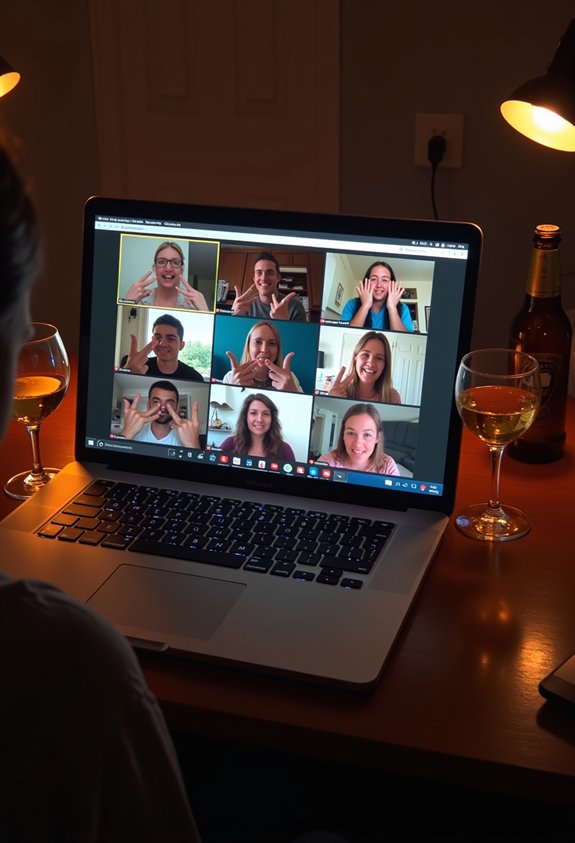
Even in a long‑distance relationship, you’ll sometimes find yourselves “public”—on social media, in group video calls, or visiting each other around friends and family—and each of these spaces creates different privacy risks.
You protect your intimacy by deciding, together, how much relationship visibility feels right in each setting.
Use simple guidelines before you “go public”:
- Agree on public space etiquette: what’s okay to post, say, or show on camera.
- Prefer private channels (encrypted messages, calls, FaceTime) for affection and conflict.
- In shared physical spaces, choose signals: a glance or phrase that means “let’s move this private.”
- If someone records or tags you, pause and check in with each other before approving.
You’re not hiding love; you’re sheltering it.
Balancing Privacy With Emotional Support Networks
You don’t just manage privacy between the two of you; you also manage what the rest of your world gets to know about your relationship.
Emotional intimacy deepens when you feel free to lean on support networks without exposing every detail. Start by naming clear privacy expectations together: what’s okay to share with close friends, family, or therapists, and what stays just between you.
Treat this as ongoing boundary negotiation, not a one‑time talk. When you’re sharing experiences with others, focus on your feelings rather than your partner’s private disclosures.
Notice how external influences—friends’ advice, social media norms, cultural scripts—shape your choices and relationship dynamics.
Check in regularly: “Did what I shared feel respectful?” That simple question strengthens trust building and keeps your bond protected.
Protecting Your Relationship During Conflicts

Conflict in a long‑distance relationship can feel louder and more public, so you’ll need to protect your bond as carefully as you protect your own privacy.
During conflict, choose private channels—encrypted messages or a call—rather than public posts or group chats, so conflict resolution happens between you and your partner, not your audience.
Resolve conflict in private channels, so your relationship stays intimate instead of becoming public spectacle
Use emotional boundaries to decide what stays inside the relationship. You can seek support without sharing screenshots, chat logs, or intimate details.
- Pause before venting online; ask what you’d feel if your partner did the same.
- Agree not to subtweet, block, or threaten breakups during fights.
- Keep device access separate from the right to read every message.
- After cooling off, review what each of you needs to feel emotionally safe.
Reassessing Privacy Levels as the Relationship Grows
As your long‑distance relationship survives hard moments and deepens, the privacy levels that worked in the beginning may start to feel too tight, too loose, or simply outdated.
You’re hitting relationship milestones: sharing more daily life, using video more than text, maybe exchanging passwords or planning visits. Each shift signals evolving comfort, but comfort alone isn’t enough.
Periodically ask, “What feels private but shareable now, and what still needs to stay mine?”
Review your use of instant messaging, video calls, and social media: do you still agree on what stays off‑line, who sees photos, and how often you post about each other?
Protect a core of individual digital space, even if you share some access. Intimacy grows best when boundaries are explicit, mutual, and revisited.
In case you were wondering
How Private Should I Keep Our Relationship From Coworkers or Classmates?
You choose what feels safe: protect intimacy with clear relationship boundaries and workplace discretion. Share basics, not details. Prioritize private channels, agree on what’s public, and don’t overshare with coworkers or classmates who don’t safeguard your closeness.
You may also like:







Is It Okay to Hide My Relationship Status on Dating Apps Still Installed?
It’s okay, but treat hidden profiles like unlocked doors—relationship visibility still matters. Good dating app etiquette means you either delete apps or clearly state you’re taken, then agree on boundaries that protect trust, privacy, and your shared intimacy.
How Do We Handle Shared Streaming Accounts Without Exposing Our Relationship?
You handle it by creating separate profiles, turning off watch history and shared activity in streaming services account settings, using neutral usernames, and agreeing not to snoop—protecting privacy while still sharing intimate movie nights together.
Can I Keep Old Photos With Exes Without Threatening Current Relationship Privacy?
You can, if you’re transparent and intentional. Imagine calmly telling your partner you’re archiving old photos in a locked folder, clarifying they’re memories, not options; evidence shows clear relationship boundaries protect both intimacy and digital privacy.
How Do We Manage Privacy When One Partner Is More Online Than the Other?
You manage privacy by explicitly negotiating social media boundaries that fit your different online presence levels. Share needs, define “private” vs “secret,” prefer direct calls/messages for intimacy, and regularly revisit agreements as comfort, trust, and circumstances change.
Conclusion
As you practice privacy, you’ll probably notice a strange coincidence: the more intentionally you protect your relationship, the safer and closer it feels. By setting clear boundaries, limiting your digital trail, and choosing carefully who you confide in, you’re not hiding love—you’re honoring it. You deserve a relationship that’s protected, not policed. Keep checking in with yourself and your partner; your needs will evolve, and your boundaries can evolve with them.


